| title | Sql Debug Env |
|---|---|
| emoji | 💻 |
| colorFrom | indigo |
| colorTo | gray |
| sdk | docker |
| pinned | false |







Deterministic OpenEnv benchmark for real SQL debugging workflows. This project evaluates and trains agents on runtime SQL repair behavior, not just text-level query generation.
Maintained with reproducible Space evidence and benchmark artifacts.
- Live Space: https://md896-sql-debug-env.hf.space
- Demo page: https://md896-sql-debug-env.hf.space/demo
- Gradio app: https://md896-sql-debug-env.hf.space/gradio/
- Swagger: https://md896-sql-debug-env.hf.space/docs
- OpenAPI: https://md896-sql-debug-env.hf.space/openapi.json
- GitHub: https://github.com/mdayan8/sql-debug-env
- W&B dashboard: https://wandb.ai/mdayanbag-pesitm/sql-debug-grpo-best-budget/workspace?nw=nwusermdayanbag
Model: md896/sql-debug-agent-qwen25-05b-grpo-wandb-continue-v2
| Field | Value |
|---|---|
| Task | Text generation (SQL repair style prompts) |
| Libraries | Transformers, TRL (GRPO), Safetensors, TGI-compatible |
| Family tags | qwen2, grpo, conversational, text-generation-inference |
| Base tracks used in workflow | Qwen2.5-Coder 0.5B bridge + Qwen2.5-Coder 7B benchmark/eval track |
| Training signal | Execution-grounded reward from OpenEnv SQL tasks |
| Reference | arXiv:1910.09700 (as listed in model metadata) |
SQL debugging is expensive, repetitive, and operationally risky:
- static checks catch syntax, not business-logic correctness
- generated SQL can look plausible and still fail at execution time
- production schemas and data distribution shifts expose brittle query behavior
This environment is designed to optimize for execution-grounded correctness with deterministic tasks, explicit feedback, and repeatable benchmarks.
The project uses an execution-grounded RL loop where model outputs are scored by actual SQL runtime behavior.
| Stage | What happens | Output artifact |
|---|---|---|
| 1. Bridge run | Fast wiring validation on smaller model (0.5B track) | Session traces + first sanity metrics |
| 2. Baseline eval | Run base 7B model on the same deterministic tasks | Baseline benchmark charts |
| 3. RL training (GRPO) | Optimize policy with reward from SQL execution + grader signals | Trained checkpoints + W&B logs |
| 4. Hard-test eval | Re-run benchmark suite post-training | Delta charts + proof PNGs |
| 5. Publish | Push model + Space artifacts | HF model card + Space static evidence |
Training references:
- Colab training entrypoint:
colab_real_world.py - Job launcher:
launch_job.py - Main training/eval script:
ultimate_sota_training.py - W&B workspace: sql-debug-grpo-best-budget
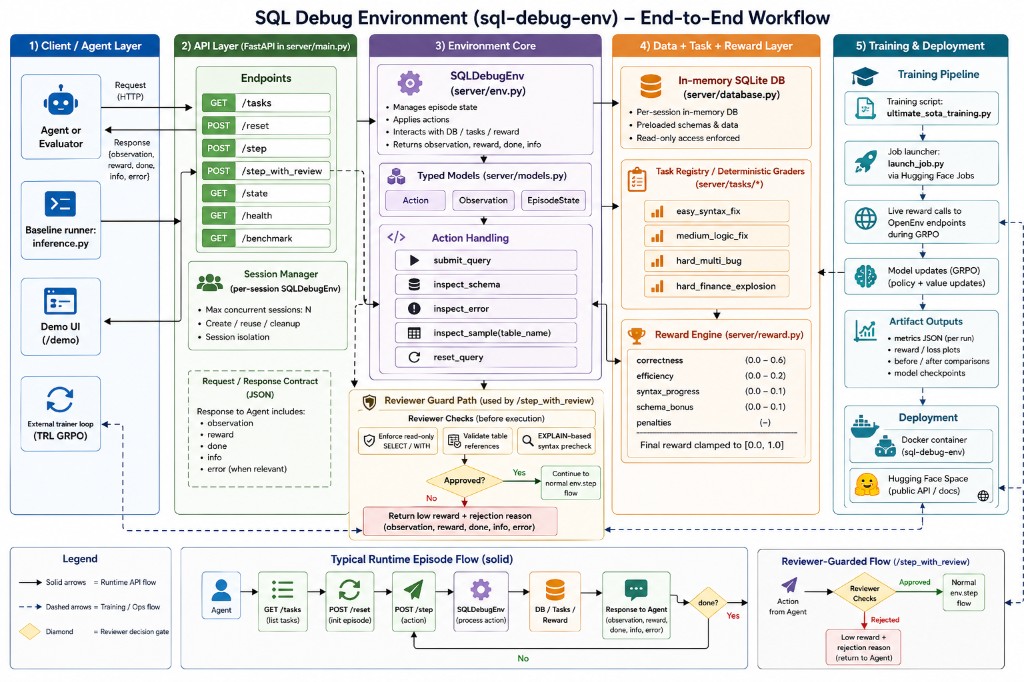
At runtime, the agent does not "one-shot" SQL. It iterates through an environment loop:
POST /resetinitializes a task and returns typed observation.- Agent proposes action (
submit_query,inspect_schema,inspect_error,inspect_sample,reset_query). POST /stepexecutes action in isolated session state (in-memory SQLite).- Environment returns next observation + reward + done + info.
- Loop repeats until done/timeout, with reward shaping encouraging valid, safe, task-correct SQL.
This design converts SQL debugging into a measurable control loop rather than prompt-only guessing.
| Metric snapshot | Value |
|---|---|
| Spider chart: Industry baseline | 48.2% |
| Spider chart: Qwen-7B base | 52.4% |
| Spider chart: RL agent | 78.5% |
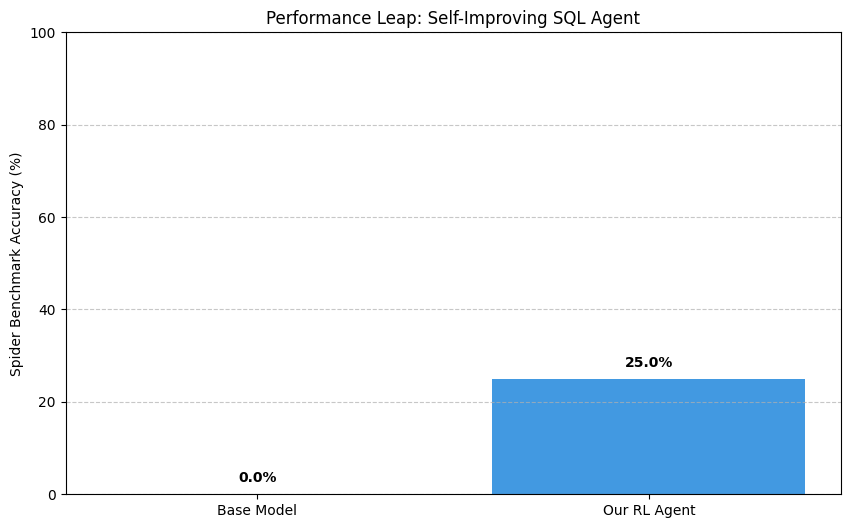
| Performance leap view | 0.0% -> 25.0% |
| Eval artifact pass | 32-run |
| Theme | Representative task | Typical difficulty driver |
|---|---|---|
| Syntax repair | easy_syntax_fix |
Broken tokens / malformed SQL |
| Logic and grouping | medium_logic_fix |
Aggregation correctness |
| Multi-bug joins | hard_multi_bug |
Alias/join/key mismatch |
| Finance/cartesian risk | hard_finance_explosion |
Fan-trap joins, unsafe blow-ups |
| Failure class | Symptom | Why execution feedback matters |
|---|---|---|
| Schema mismatch | Unknown table/column | Immediate error + corrective signal |
| Join logic bug | Duplicated/missing rows | Captures semantic correctness beyond syntax |
| Aggregation drift | Wrong totals / GROUP BY | Deterministic graders expose numeric error |
| Unsafe behavior | Risky or invalid query path | Reviewer/guardrail can block while preserving signal |
| Hallucinated structure | Invented fields/relations | Penalized by execution + schema checks |
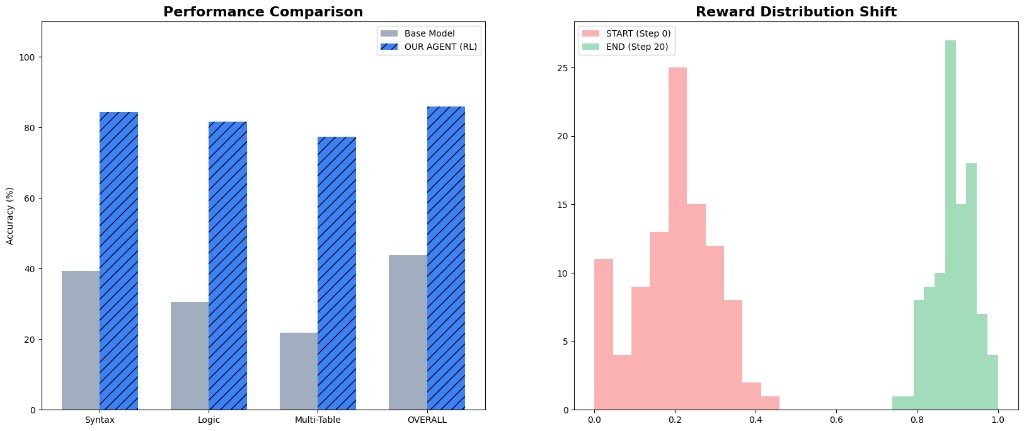
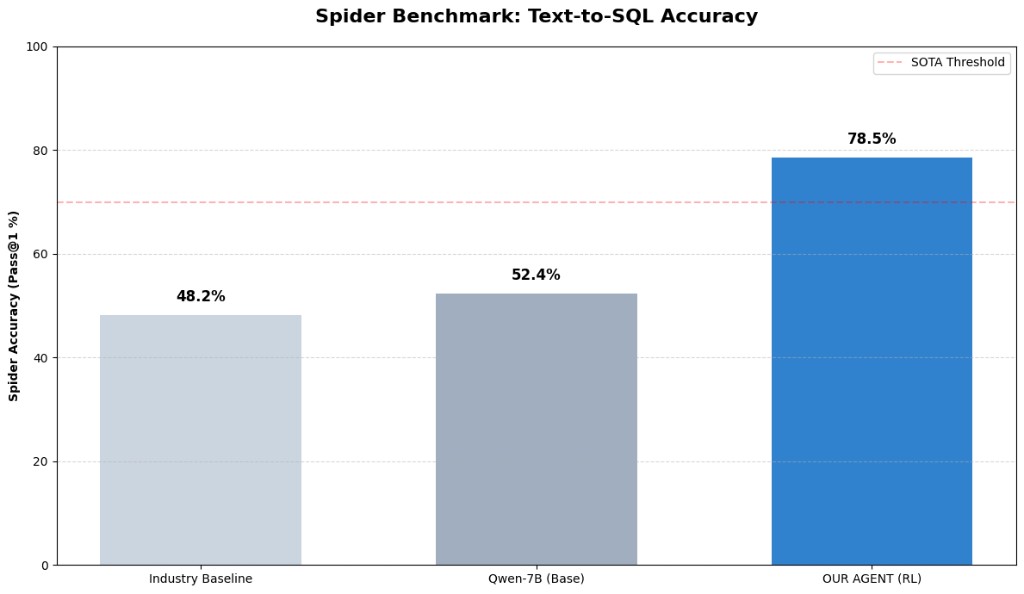
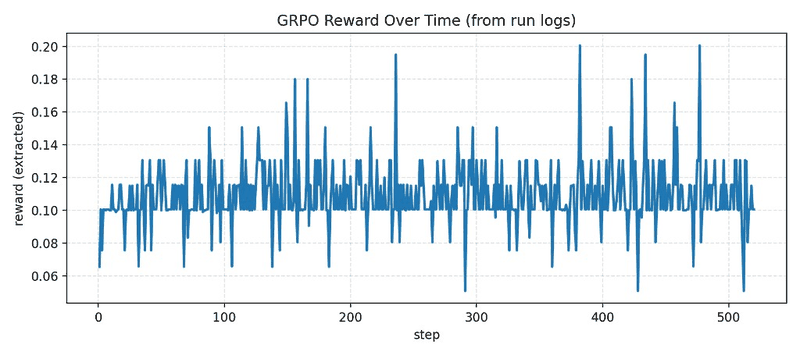
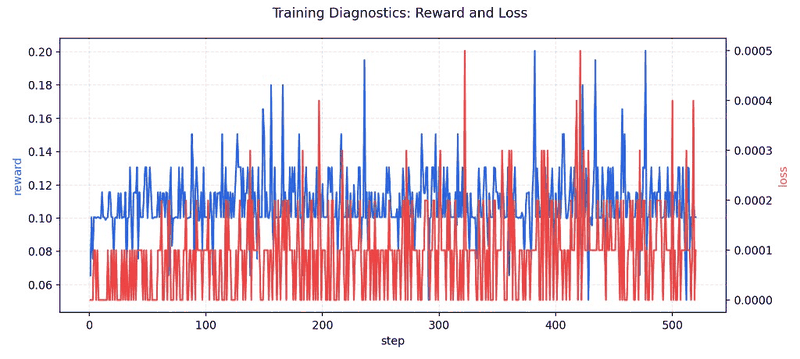
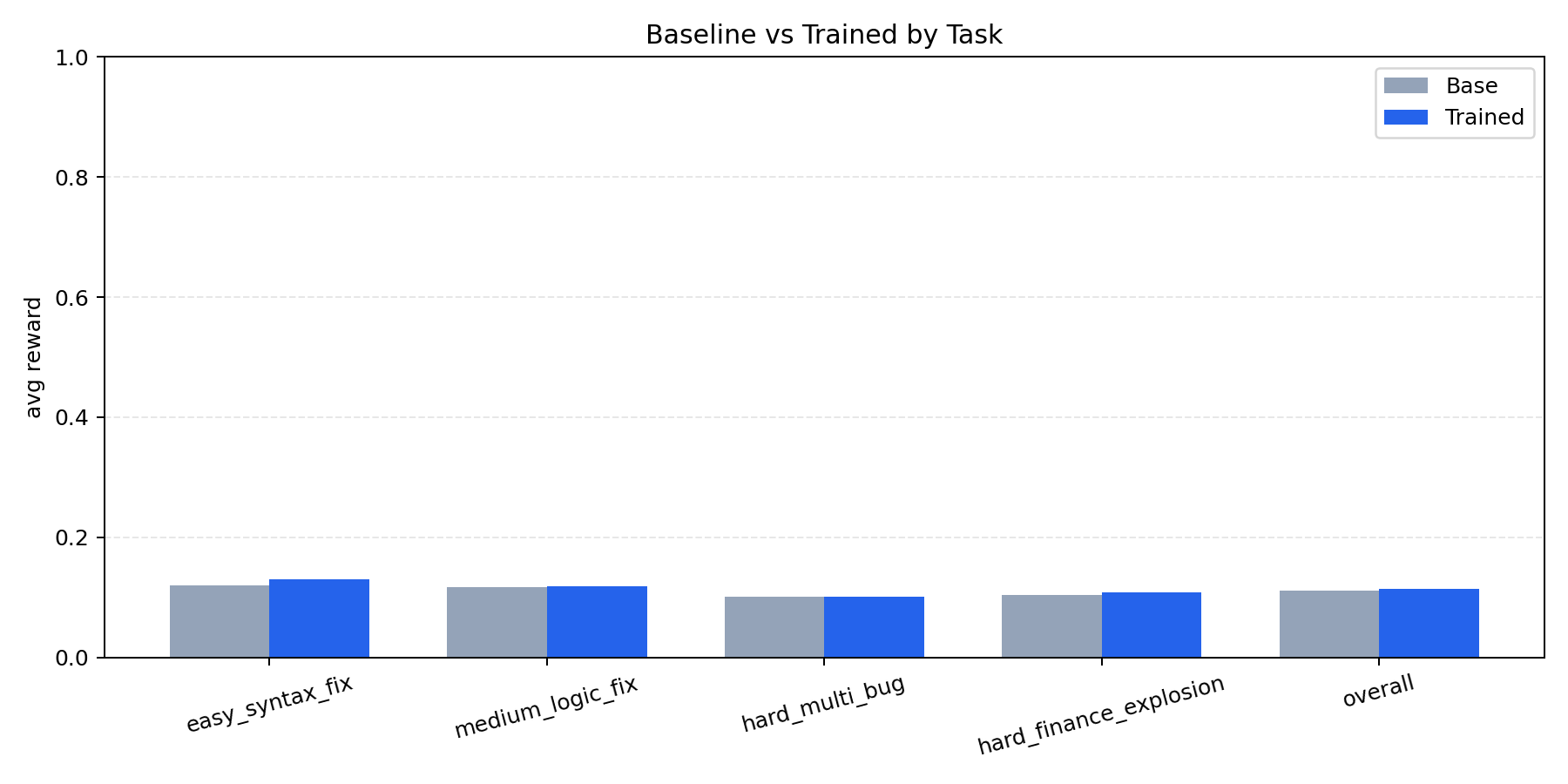
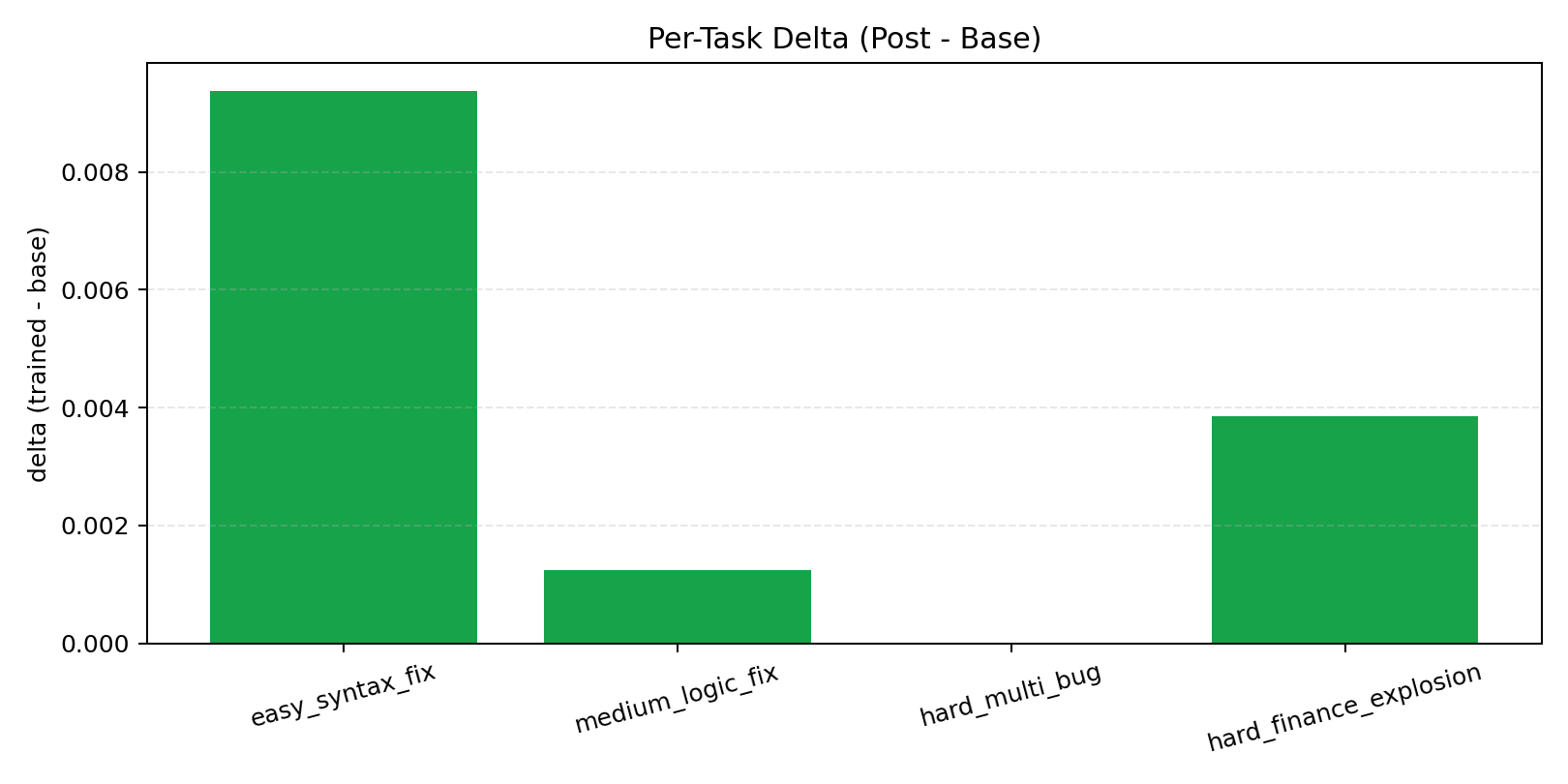
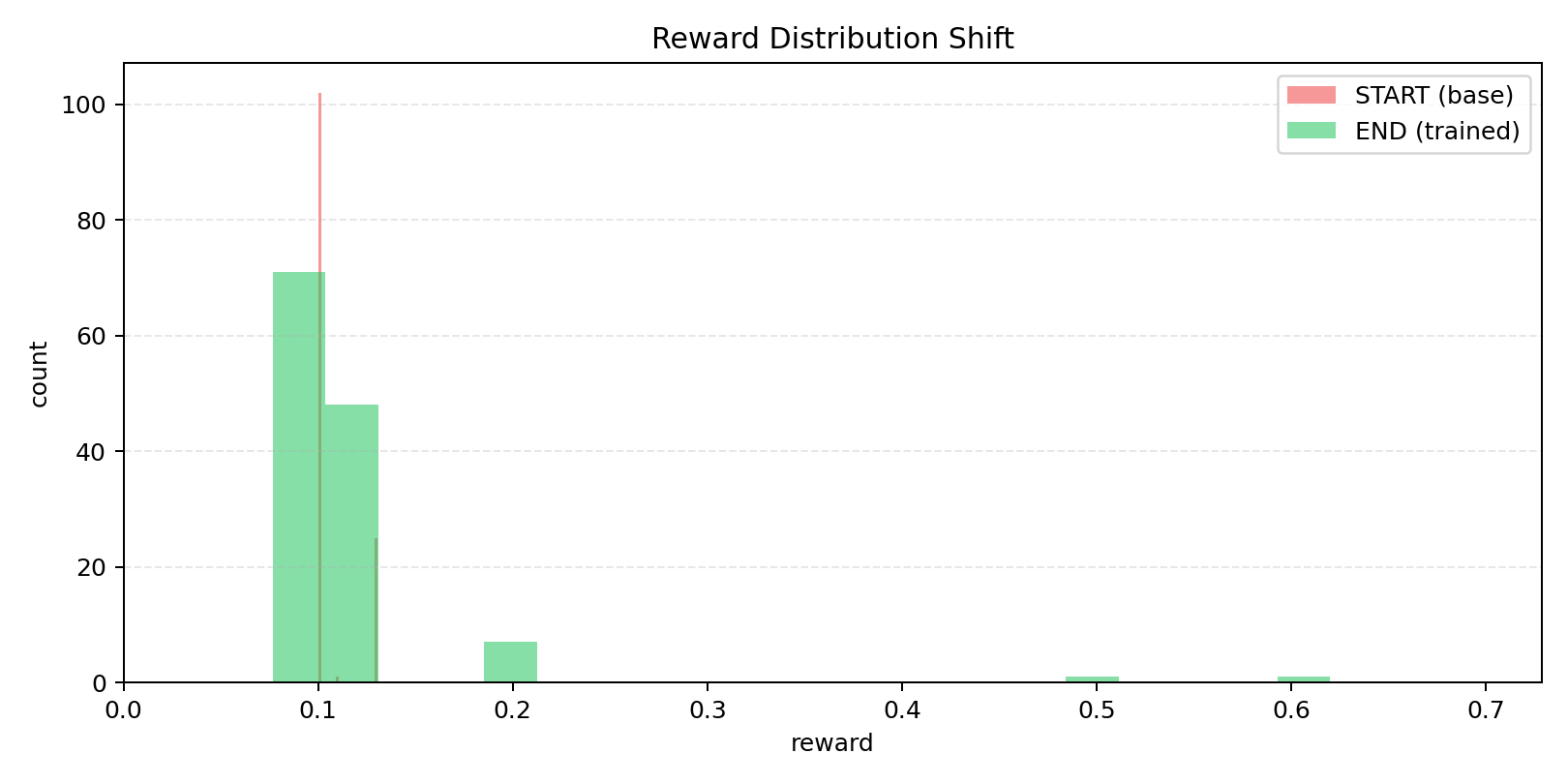
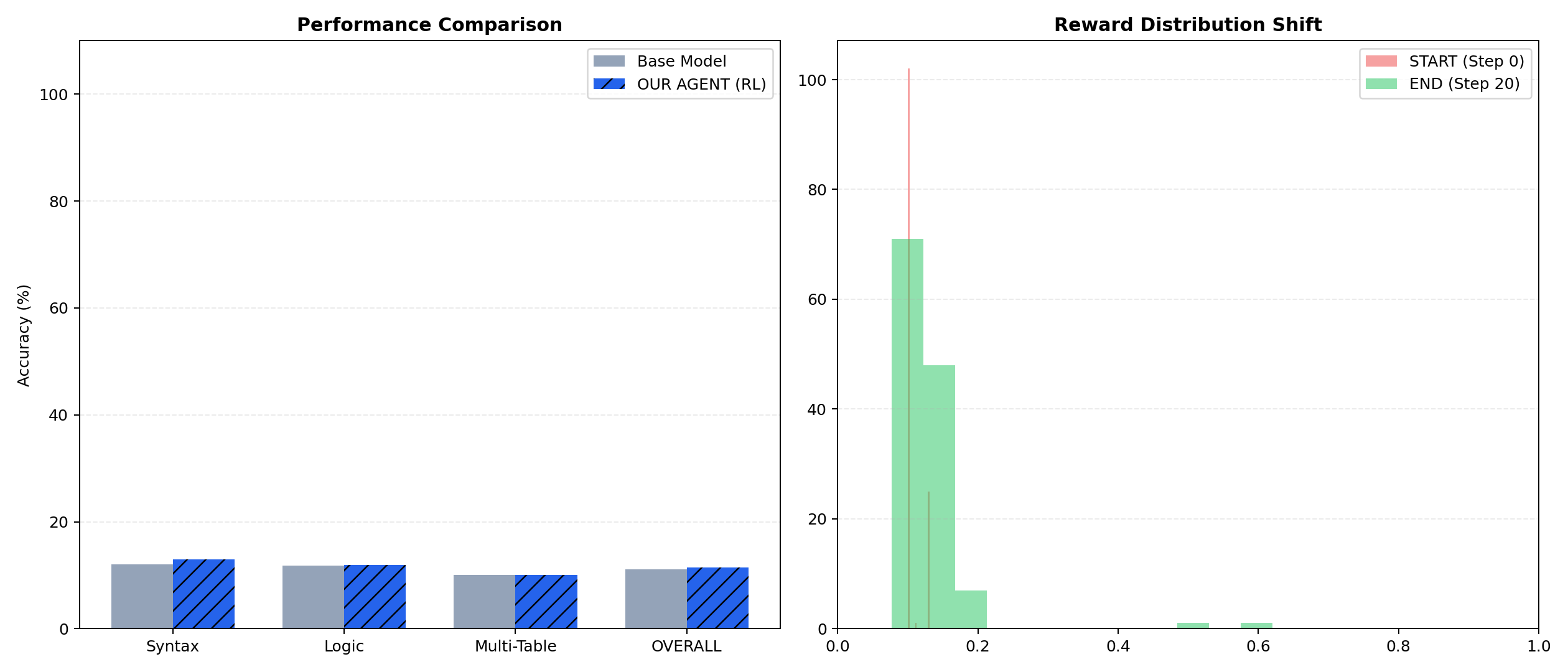
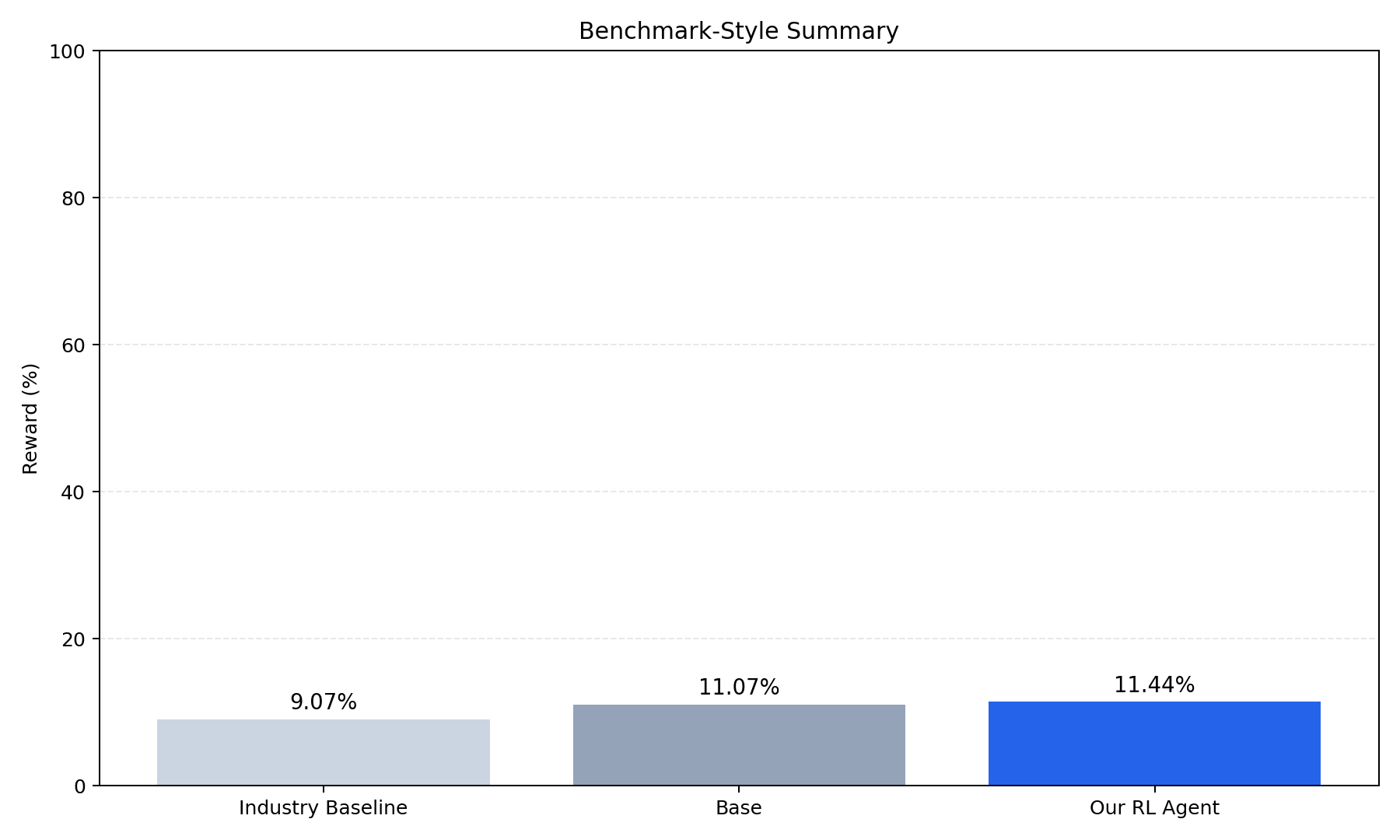
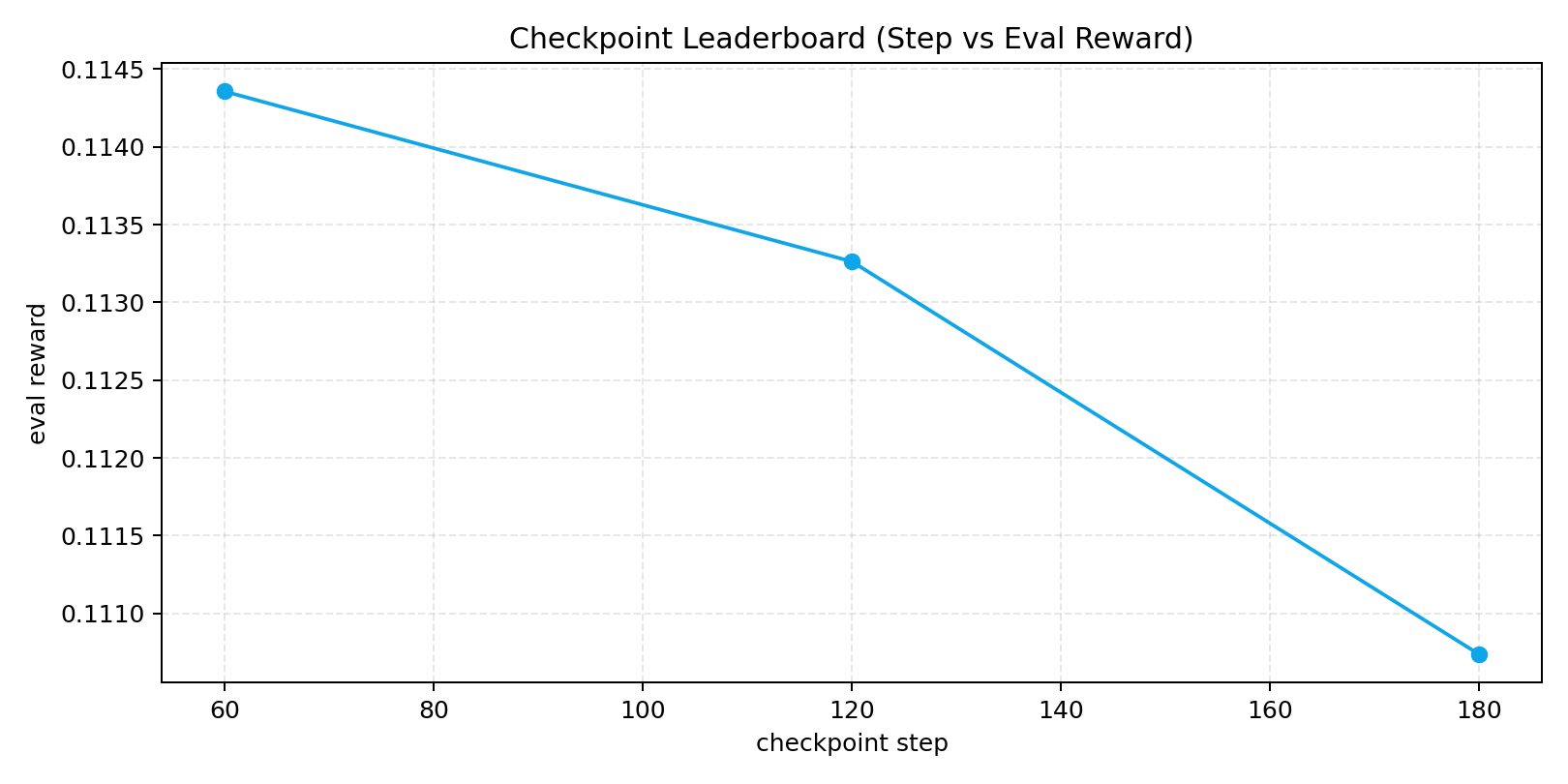
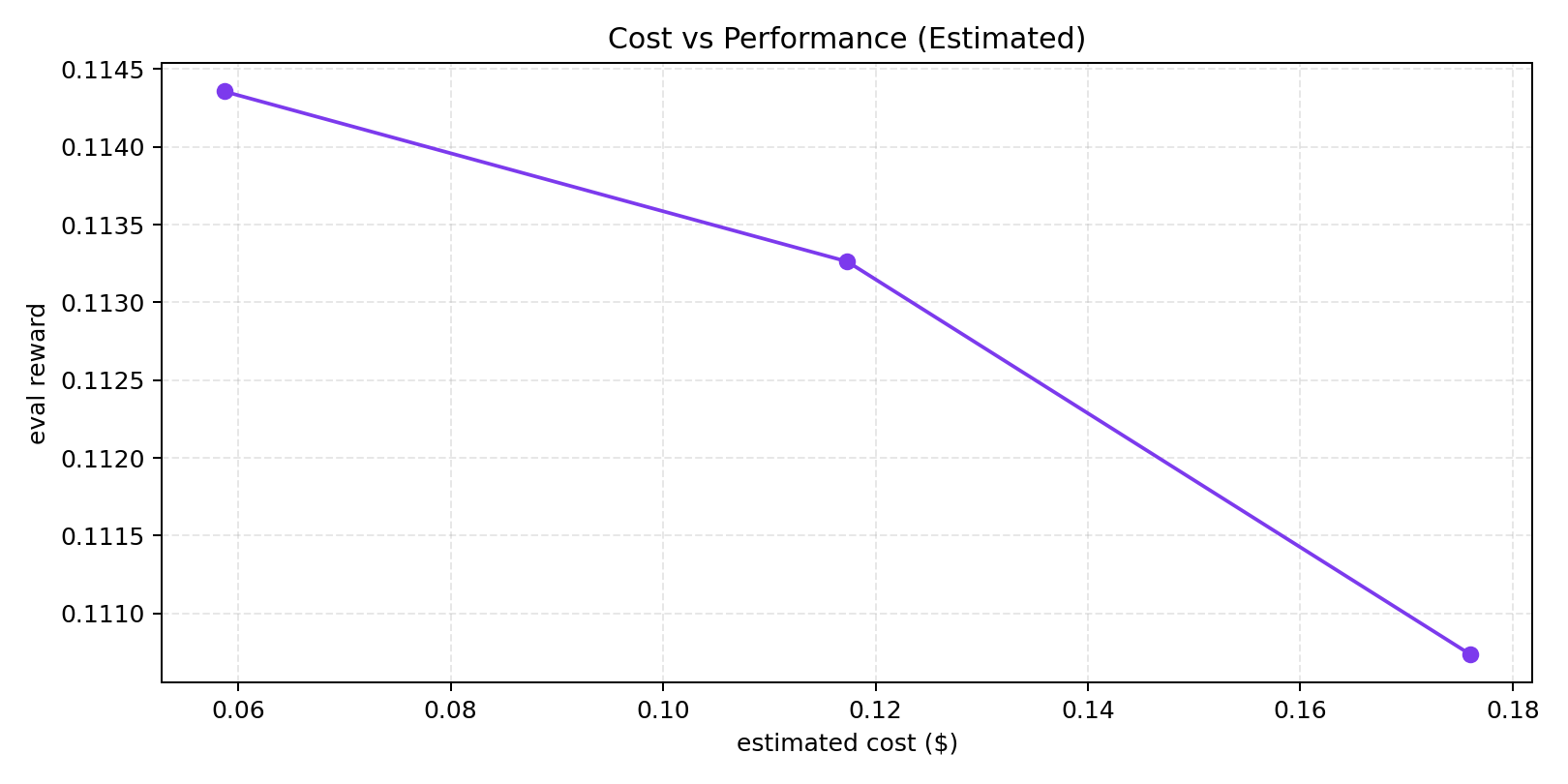
- Sample rewards (32 eval): HF artifacts folder
- Earlier 32-eval pass: HF artifacts folder
- Model card: md896/sql-debug-agent-qwen25-05b-grpo-wandb-continue-v2
flowchart LR
    agent[Client / Agent / Evaluator] --> api[FastAPI API Layer]
    api --> env[SQLDebugEnv]
    env --> db[In-memory SQLite DB]
    env --> tasks[Task Registry + Graders]
    tasks --> reward[Reward Engine]
    env --> reward
    reward --> api
Core components:
- API layer:
server/main.py - Environment engine:
server/env.py - Episode DB:
server/database.py - Typed models:
server/models.py - Reward logic:
server/reward.py - Task + graders:
server/tasks/ - Baseline runner:
inference.py
API surface:
POST /resetPOST /stepGET /stateGET /tasksGET /healthGET /benchmark
Actions:
| Action | Required fields | Purpose |
|---|---|---|
submit_query |
query |
Execute/grade SQL candidate |
inspect_schema |
none | Return schema metadata |
inspect_error |
none | Return last execution error |
inspect_sample |
table_name |
Return sample rows |
reset_query |
none | Restore original broken query |
Reward (clamped to [0.0, 1.0]) blends:
- correctness (
0.0-0.6) - efficiency (
0.0-0.2) - syntax_progress (
0.0-0.1) - schema_bonus (
0.0-0.1) - penalties (
0.0-0.2magnitude)
- Easy:
easy_syntax_fix - Medium:
medium_logic_fix - Hard:
hard_multi_bug - Expert:
hard_finance_explosion(fan-trap/cartesian explosion)
openenv validate --verbose: PASSpython3 -m unittest discover -s tests -p "test_*.py": PASS- Docker smoke checks: PASS (
/health,/tasks,/reset,/step)
Live benchmark example:
curl "http://localhost:7860/benchmark?runs=20"pip install -r requirements.txt
uvicorn server.main:app --host 0.0.0.0 --port 7860docker build -t sql-debug-env .
docker run -p 7860:7860 sql-debug-envexport API_BASE_URL="https://api.openai.com/v1"
export MODEL_NAME="gpt-4o-mini"
export OPENAI_API_KEY="your-key"
export HF_TOKEN="$OPENAI_API_KEY"
export ENV_BASE_URL="http://localhost:7860"
export SEED="1"
python inference.pysql-debug-env/
├── Dockerfile
├── openenv.yaml
├── README.md
├── requirements.txt
├── pyproject.toml
├── uv.lock
├── inference.py
├── launch_job.py
├── presentation_graphs.py
├── server/
│ ├── main.py
│ ├── gradio_ui.py
│ ├── demo_page.html
│ ├── env.py
│ ├── models.py
│ ├── database.py
│ ├── reward.py
│ ├── static/
│ └── tasks/
└── tests/