I'm an Android engineer with more than three years of commercial Kotlin. I work in product teams, and the job runs from a single feature to the module structure a whole app stands on: so far I have built 25 feature modules from scratch. In the open, I contribute to networking code in Rust.
- 📱 Android first. Jetpack Compose and Material 3 on top of coroutines and Flow.
- 🧩 Architecture. MVI on Clean Architecture, multi-module, with one state per screen.
- 🌍 Multiplatform. Kotlin Multiplatform when Android and iOS should share one codebase.
- 🦀 Networking in Rust. TLS, QUIC and DNS on async I/O, with the JNI and FFI bridges that bring one core to Android and iOS.
- 🤝 In a team. Code review, technical interviews, Scrum.
| Area | What I use |
|---|---|
| Languages | Kotlin, Rust |
| UI | Jetpack Compose, Material 3, Navigation |
| Concurrency | Coroutines, Flow |
| Architecture | MVI, Clean Architecture, multi-module, Kotlin Multiplatform |
| Data | Room, Retrofit, Ktor |
| Dependency injection | Koin |
| Networking | Rust with Tokio: TLS, QUIC, DNS |
| Build and quality | Gradle convention plugins, detekt, R8, GitHub Actions |
flowchart LR
    subgraph ui["UI · Jetpack Compose"]
        screen["Screen"] -- "action" --> vm["ViewModel"]
        vm -- "state" --> screen
    end
    subgraph domain["Domain · pure Kotlin"]
        usecase["Use cases"]
    end
    subgraph data["Data"]
        repo["Repositories"] --> api[("Network")]
        repo --> db[("Database")]
    end
    vm --> usecase --> repo
- One direction. A screen sends actions and renders one immutable state.
- Small modules. A feature sits behind a thin API module, so builds stay fast and boundaries stay honest.
- Build logic as code. Convention plugins, detekt and R8 rules live next to the app and are reviewed like it.
Note
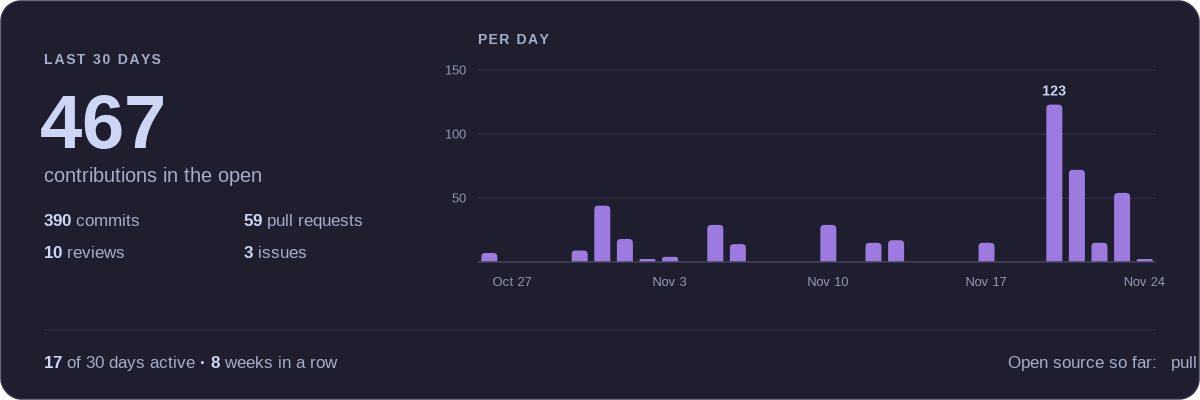
Most of my Kotlin lives in private product repositories. What you see here is only the part I do in the open.